
There are various types of prototypes: technical prototypes, new technology prototypes, proof-of-concept prototypes and so on...
when prototyping a toy, some aspects are really a must have. The movement and response should be pleasant to the touch. The object should react in a fun and provocative way. Tegotae
Toys are what players will spend most of their time playing with.
The toy should appear alive and reactive enough to provide pleasure when used.
That first impression, thought, feeling is very important, usually it is what the player will be doing the most part of the time, so it must be pleasant. while building it, I don't want to destroy it too early with analysis, it's about feel; it needs to convey a feeling and remain. At this stage, there is no story, there is no why, there are no rules, eventually only states, and the fantasy unfolds in the mind of the player/tester.
But at some point, if the toy is validated, it’s time to turn it into a game mechanic; that sensation needs to be converted into something I can tweak and that offers a challenge.
That is where I start looking for atomic parameters.
An atomic parameter is the smallest significant value that defines an axis of behavioral mechanics.
A group of atomic parameters constitutes a set of atomic parameters that define the measurement of the mechanics.
Imagine a recording studio console; these parameters are the buttons that control the channels.
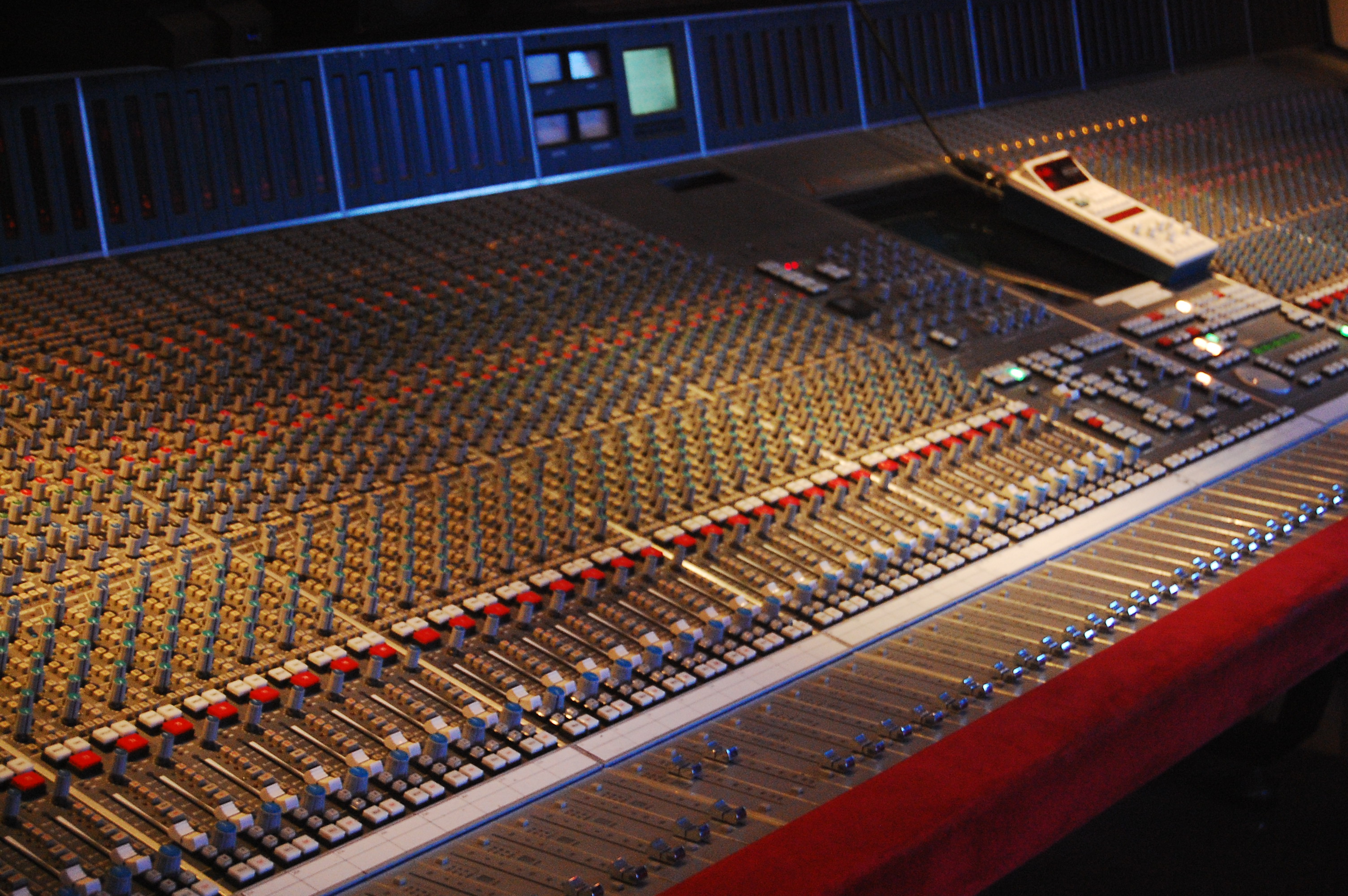
Think of it as a console where each button controls an different atomic parameters; together they control the elements of your mechanic. They are the DNA of the mechanic.
A mechanic becomes much easier to prototype when I can see the values that create its behavior and play with their min and max.
A mechanic is not only an idea
A mechanic can start as a sentence, usually a verb.
The player jumps higher when holding the button.
The cube rolls with physical weight.
The enemy charges before attacking.
The platform moves when the player stands on it.
The problem is that a sentence is not enough to prototype with precision.
At some point, the mechanic needs values.
How high?
How fast?
How long?
How much force?
How much delay?
How much recovery?
How far is too far?
What happens at the minimum?
What happens at the maximum?
What becomes impossible?
Until those questions are answered, the mechanic is still partly imaginary, or just a testable but not playable.
A mechanic becomes real when the designer can change parameter values that make it playable.
What makes a parameter atomic?
A parameter is atomic when it cannot be reduced further without losing its meaning.
For example, if I am prototyping a jump, I might see parameters like this:
jump_height
jump_duration
gravity_strength
takeoff_delay
air_control
landing_recovery
coyote_time
input_buffer
Each one changes the feel in a different way, for the player it's just a jump and reported as jump feel, for the designer it's the set of atomic parameters that transform the jump into a mechanic to challenge the player.
Atomic parameters must avoid creating technical noise, so granularity is very important. Sometimes you want to have a meaningful atomic parameter called smoothness of jump, in fact, the designer sit wiht the programmer and define what he wants to represent and the programmer says: "Deal, to represent it I can use three code parameters" but for the designer it becomes one atomic parameters only. This is not usual but it can avoiding technical noise, it's a team choice and designing choice.
The goal is not to list every variable in the code, variables on itself are not atomic parameters.
The goal is to identify the smallest values that matter to the player experience.
A good atomic parameter is:
- clear
- indivisible
- tunable
- observable
- player-perceivable
- non-conflicting
It is easy to identify an atomic parameter: ask yourself whether the atomic parameter you created meets the criteria in the list above and, if so, whether it could be confused with any other existing parameter.
If two atomic parameters fight each other constantly in meaning and effect/result, you need to re-analyse them, for this, you will want to have a programmer with you.
Values must become simple ranges
A parameter is more useful when it can be viewed as a range.
Not:
jump_preparation = time button pressed
But:
jump_preparation = NO_JUMP = value
jump_preparation = MINIMUM_ACTIVATION_TIME = value
jump_preparation = MAX_ACTIVATION_TIME = value
jump_preparation = NO_MORE_TIME = value
This may sound no sense, but then a designer can say: "we need a small window of opportunity for jumping on this part of the level, we cannot allow jump_preparation with MAX_ACTIVATION_TIME". I know you may be wondering now, your brain starts thinking about it, but here I just need you to understand the concept.
This is why I like thinking in states like this:
No effect
  -> Minimum
  -> Medium
  -> Maximum
  -> Impossible
This improves the communication between programmers with game designers, and game designers with level designers.
This structure is simple, but it is also powerful during prototyping, why? it forces you thinking verbs and parameters and the question becomes:
Where does the mechanic begin to be felt?
Where does it become useful?
Where does it become fun?
Where does it become excessive?
Where does it break?
Where does one thing interfere with another?
Interpolation, relationship, etc...
Those are design questions, not only technical questions.
The impossible value is important
Designers often focus on the good value.
But the impossible value teaches a lot.
When a value becomes impossible, the mechanic reveals its boundary.
If jump height is too high, level structure collapses.
If acceleration is too fast, control becomes twitchy.
If enemy tracking is too strong, the player feels cheated.
If recovery is too short, pressure becomes oppression.
If camera smoothing is too slow, the player feels disconnected.
If feedback is too subtle, the action becomes invisible.
The impossible value tells me:
This is where the mechanic stops being itself.
So, if you’ve read this far, you already understand that atomic parameters serve to anticipate this type of problem; they establish the limits. It protects the mechanic.
Parameters also emerge from the input
A mechanic does not need parameters because the code needs variables. It needs parameters because the player needs a readable relationship between intention and result.
The player presses.
The world answers.
The player holds.
The world continues.
The player releases.
The world commits, cancels, launches, drops, confirms, or transforms.
Every input creates a need for interpretation.
Parameters should not be invented in isolation, they are interpretations of what the player is trying to do.
Protect the toy
Premature analysis can ruin a toy, as it is impossible to focus on those aspects when trying to convey a specific feel; that said, in practice, I have created prototypes based purely on algorithms that behaved like toys, and certainly relied on parameters, yet knowing those fundamental parameters allowed me to monitor them and preserve the feel I sought to convey.
Once you have a toy, people has tested it and you have tweaked it, you need to shift to parameters identification, it's a different moment.
before you were tweaking variables now you are giving a meaning to them.
It protects the toy. It helps me understand why the interaction feels alive, then preserve that life while I tune it.
The goal is to make the toy repeatable, tunable, and teachable.
Parameters become promises
Every parameter creates an expectation. If the player learns that an enemy always pauses before attacking, that pause becomes a promise. If the player learns that a jump always reaches a certain height, that height becomes a promise. If the player learns that a projectile always travels at a readable speed, that speed becomes a promise. Breaking a promise can be exciting, but only if the player understands that the break is intentional. Accidental parameter drift creates distrust.
A mechanic feels solid when its parameters create stable expectations. A mechanic feels expressive when those expectations allow meaningful variation.
That balance is the work.
The player does not see parameters
The player should not feel that they are manipulating numbers.
The player should feel the world.
They should feel weight, pressure, risk, timing, rhythm, force, responsiveness, and mastery.
Atomic parameters are for the designer.
A practical prototyping checklist
When a mechanic starts feeling interesting, I ask these questions.
Identity
What is the toy pleasure?
What is the mechanic really about?
What should the player feel first?
Inputs
What is the player trying to do?
What input states matter?
Tap, hold, release, aim, direction, rhythm, pressure, or sequence?
Parameters
What values shape the behavior?
Which ones are truly player-perceiving?
Which ones are technical support only?
Ranges
Where is the minimum useful value?
Where is the expressive range?
Where is the maximum safe value?
Where does the mechanic become impossible?
Feedback
Does the feedback reveal the parameter state?
Can the player feel the difference between low, medium, and high values?
Does the system explain failure and success?
Mastery
Can the player improve by understanding the values through play? not numerical values!
Can I challenge the player changing some atomic parameters, maybe group that configuration in EASY, MEDIUM, HARD?
Can it combine with other systems without losing identity?
Closing thought
Atomic parameters are not bureaucracy.
They are not spreadsheets for the sake of spreadsheets.
They are the smallest design handles that let a prototype become a game mechanic.
A toy becomes stronger when I can understand what makes it alive.
A mechanic becomes stronger when I can tune that life without killing it.
That is why atomic parameters matter.
They are the DNA of a mechanic.