Rhythm and pacing are often used as if they mean the same thing. They do not. They are related, but they solve different design problems.
Pacing is the tempo of a moment. You enter a combat encounter; the duration and intensity of that combat define its tempo.
Rhythm is the identity of the whole experience over time. Imagine you have played N combat encounters in the last 20 minutes. Those combats, plus everything that happened between them, dictate the rhythm of your game.
Pacing → local tempo  → moment-to-moment intensity
Rhythm → global flow  → repeated identity over time
A game needs both.
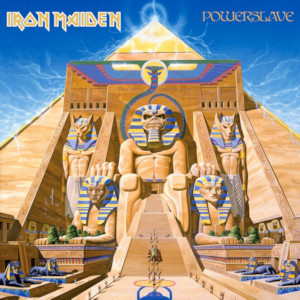
Metaphorically speaking, think of an Iron Maiden album as a full game experience. Each song has its own internal build, tempo, and progression, that’s the pacing of the experience. The track order, meanwhile, is the sequencing that makes the album land as a cohesive whole, giving the entire experience its rhythm.
Pacing is the local edit
Pacing is about the flow of a specific segment.
- A combat encounter.
- A puzzle room.
- A chase.
- A tutorial moment.
- A boss phase.
- A traversal section.
- A menu interaction.
- A single mechanic test.
Pacing asks:
- How fast does this moment move?
- How much pressure is here?
- How long before the player breathes?
- When does the next decision arrive?
- When does tension rise?
- When does it release?
Pacing is the edit inside a single song, the intro, the build, the release. It is not the track list.
It is not about fast, and it is not about slow. It is about giving each moment the shape it needs to serve the larger experience, keep the flow, keep the energy.
Once I worked on a game, and I remember the director telling me: "People start playing this and they cannot stop until the game is finished. It cannot be this way for this audience, you need to tell them to go to sleep." He was right, and we fixed it in a very creative way. At the time I did not know how to put it, but the problem domain was the right rhythm for the right audience.
A good pacing pass asks whether the current moment is giving the player the right amount of information, reward, pressure, and time.
Rhythm is the larger pattern
Rhythm is the larger flow identity, the experience as a whole. It is not one moment. It is the pattern across many moments.
A game can have fast and slow sections and still have a clear rhythm.
A metal song can have pacing variations and still feel like metal.
An action movie can have quiet scenes and still maintain an action rhythm.
A game can have exploration, combat, reward, puzzle, silence, and surprise, and still feel like one coherent experience. Uncharted did it by encapsulating everything inside a playable story, so the whole game keeps one pulse.
Rhythm asks:
- What is the repeated emotional pattern of this game?
- Which stretches bore most players?
- What does the player keep returning to?
- What is the pulse of the experience?
- How does the game breathe?
- Where does it accelerate, pause, surprise, and resolve?
Pacing shapes the moment. Rhythm shapes the memory of the experience.
Prototypes, pacing, and rhythm
Here it gets more complex. During prototyping, you spend most of your time solving a doubt or a problem, resolving issues and making discoveries in isolation, or through a prototype mandate ticket. Even when you combine prototypes to simulate a complete experience later in the process, the very nature of a prototype means it lacks the cognitive elements and semantic connections needed to simulate the full experience.
Establishing a rhythm at this stage is simply not possible. The best you can do is define a macro loop and design around it.
Once, I worked on a huge project, so many mechanics, so many systems, and I had an idea. Let me share it; who knows, it may help you with your own game's rhythm.
I took every prototype we had, along with the average time players spent in each one, captured during playtests. Then I built a new prototype: an image map, with all those experiences spread across it, each one represented by its prototype's image and its playtest duration. I added music to dictate the pacing of each encounter. Then I called the game director and the creative director and made them play the NO-GAME. For each prototype they entered, I played video of real players from our playtest sessions.
If you are still with me, you know what I had done: I had prototyped the rhythm of the game. They could see for themselves what kind of rhythm they were creating, before anything was fully merged. They changed things after that session, and the game flowed.
So you may think: the challenge is clear, the enemy works, the feedback is strong, the moment is paced well. But after five rooms, everything feels the same. The game becomes flat.
That is not a pacing problem.
It is a rhythm problem.
The individual beats work, but the larger pattern has no variation, no contrast, no breathing.
The player needs more than good moments.
They need a flow where the meaning keeps changing over time.